The Measures are Numbered
Returning to the cantatas
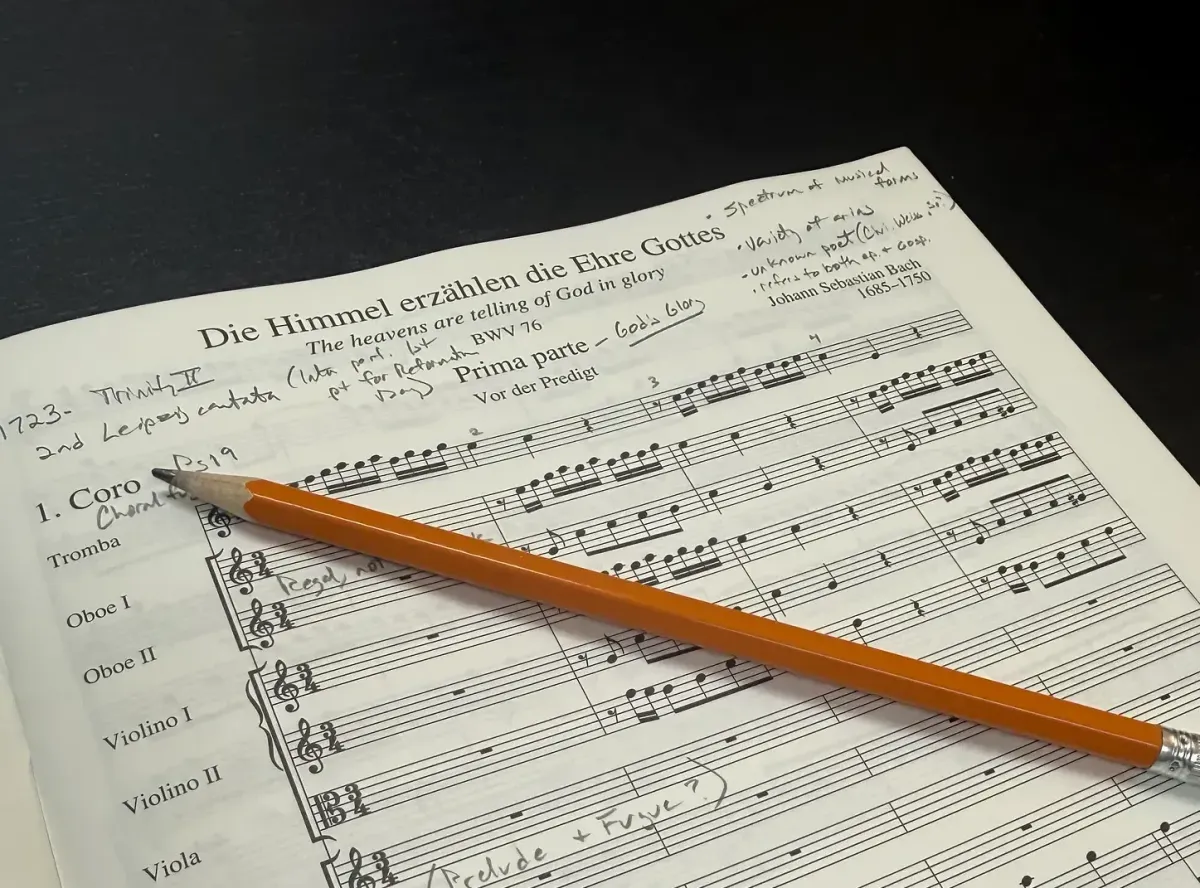
Summer has a way of seeping into my habits, and I find myself napping on the porch more, both literally and figuratively. But the time comes when I start to feel the need to work. As a result, I find my hands on music scores more frequently. At first I just hold them, and turn through the pages. I know there will come a time when I have to kick-start my study. For this, the best way I know to gain focus is simply by numbering the measures. It is relatively mindless work, but it lets my eye move across the page, and I know my mind is taking notes.
What struck me first about Cantata 76, the first cantata for this new season of Bach Vespers, was its scope. It is big, dramatic, and ambitious. It has a lot to say. This grandeur is notable, in part, because it was one of two works he wrote to begin his new tenure at Leipzig. To quote the great baseball movie Bull Durham, Bach was “announcing his presence with authority.”
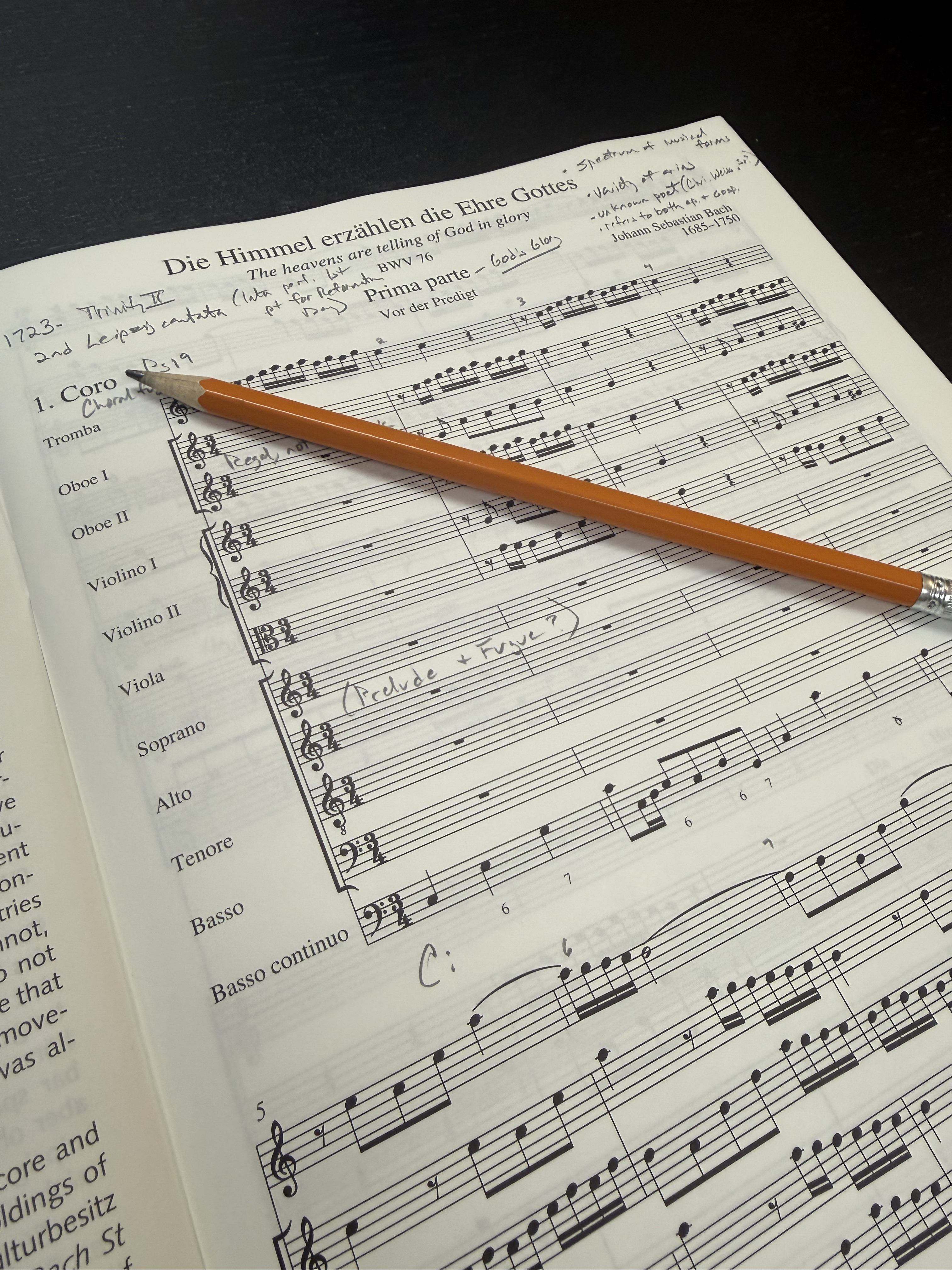
But like the great facade of a cathedral, the work has form and structure that, if we are open to it, shape the way we listen. It feels like there are two pieces here, dividing along the lines Bach gave us. The two parts were separated by a sermon. There is a record of Bach performing each part as stand-alone works. What binds them together?
We humans love duality: the two sides of a coin, light and darkness, tension and resolution. I remember learning what dolce pena (“sweet pain”) was from Monteverdi. Here, Bach’s unknown librettist pits the grandeur of creation, the sense of wonder we encounter in the natural world, what tradition calls the ‘glory of God’ against the moral requirement for such gifts: the love of neighbor. The implication is that you can’t have one without the other. That alone is a lesson worth sharing, and so I am glad we start our season here.
There is so much more to learn for me. Interestingly, Bach seems to be drawing from both readings of the day, the Epistle and the Gospel. He does not always do that. The emotional range of the arias is something to behold. He is even up to his old tricks of burying hidden meaning by including a reference to the Ten Commandments that appears nowhere in the prescribed texts of the day. There is the uncommon use of the viola da gamba and oboe d’amore. What does he mean here?
The measures are numbered. The questions have only just begun.